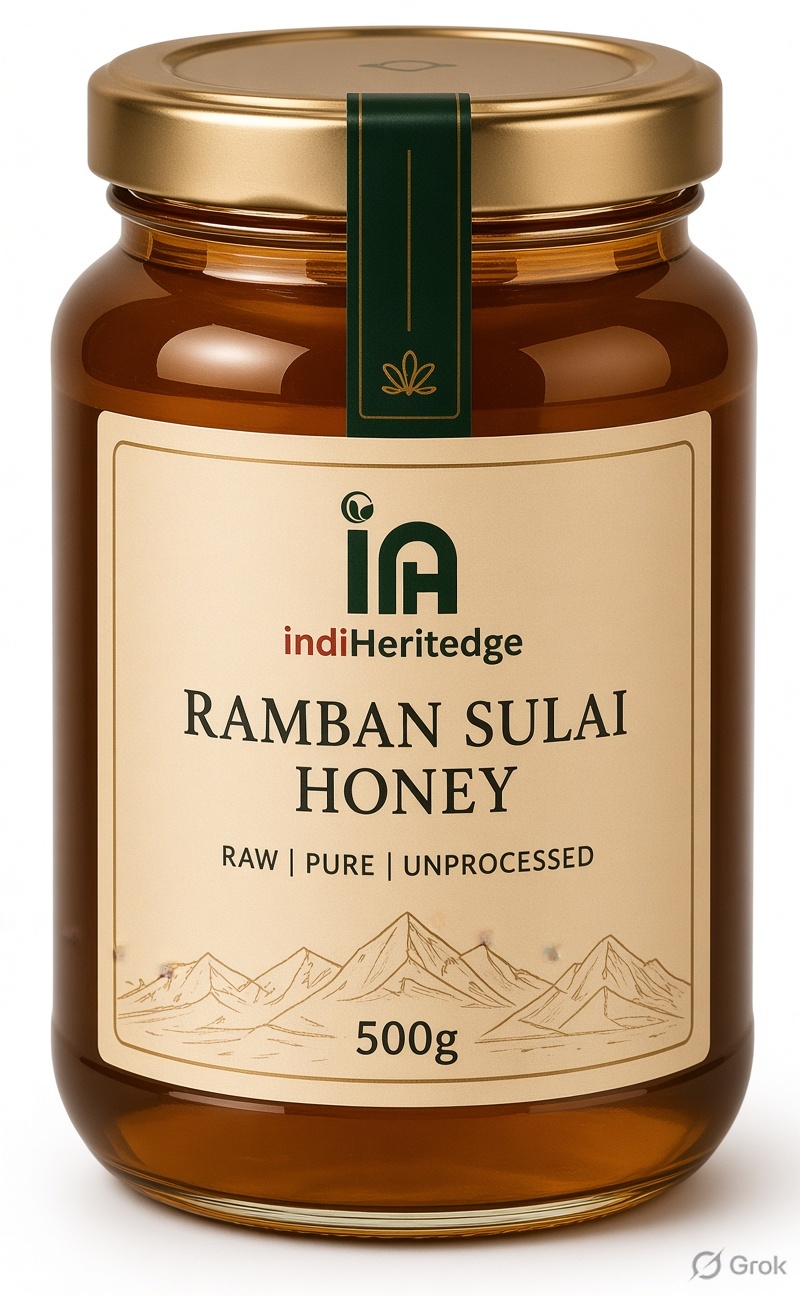
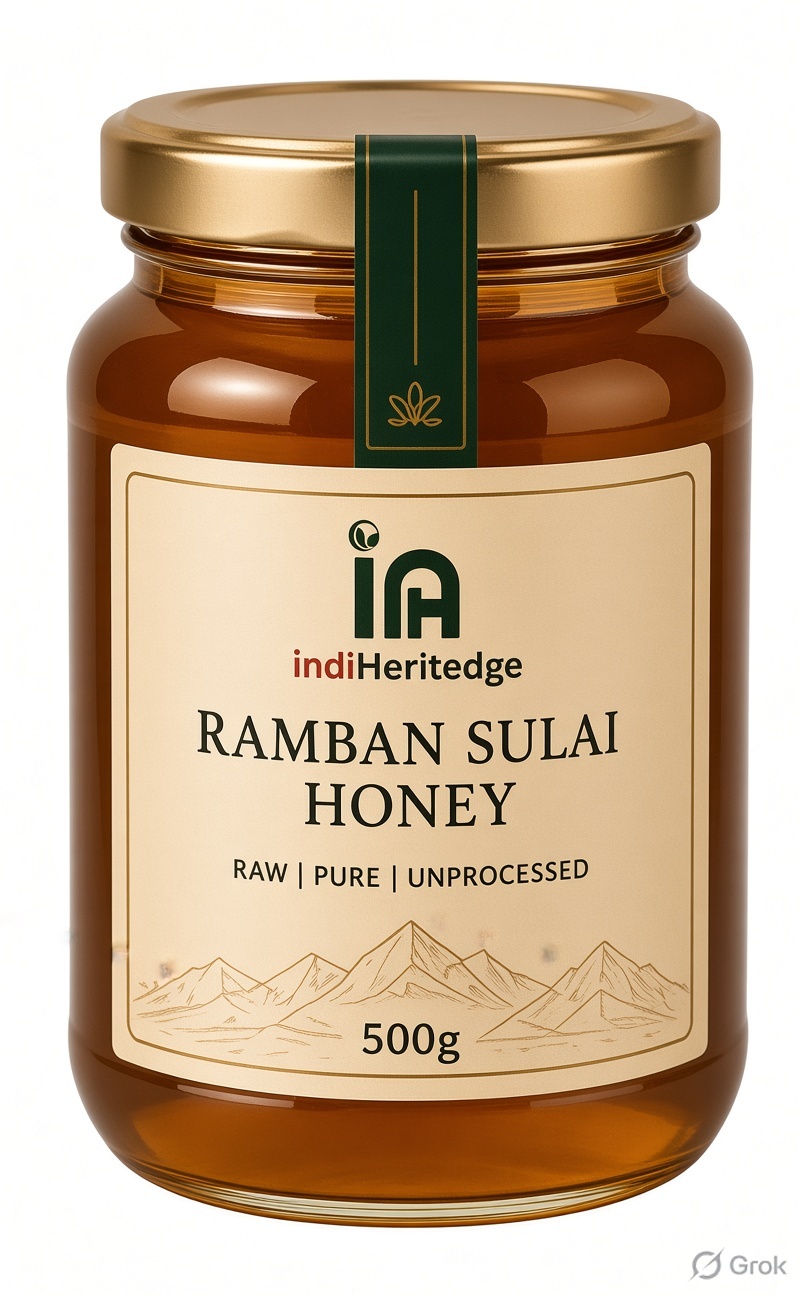
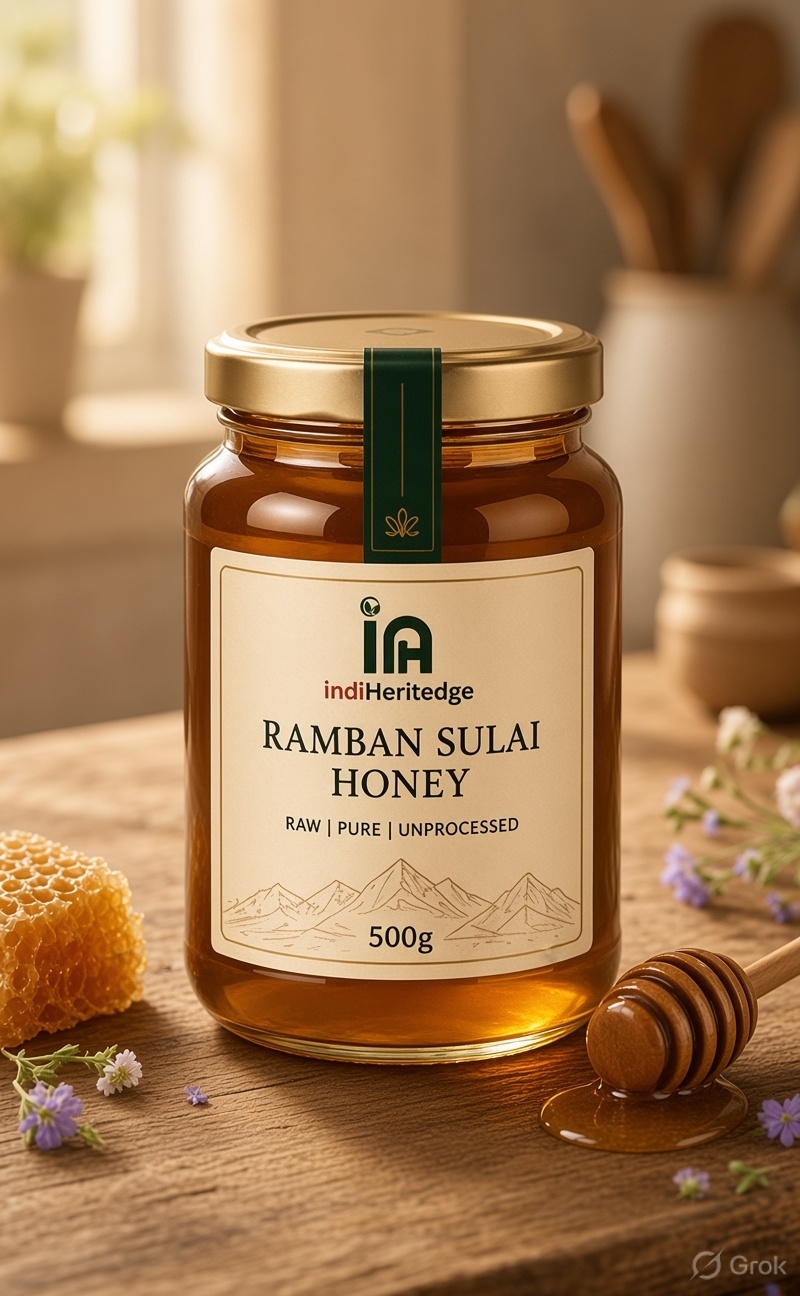
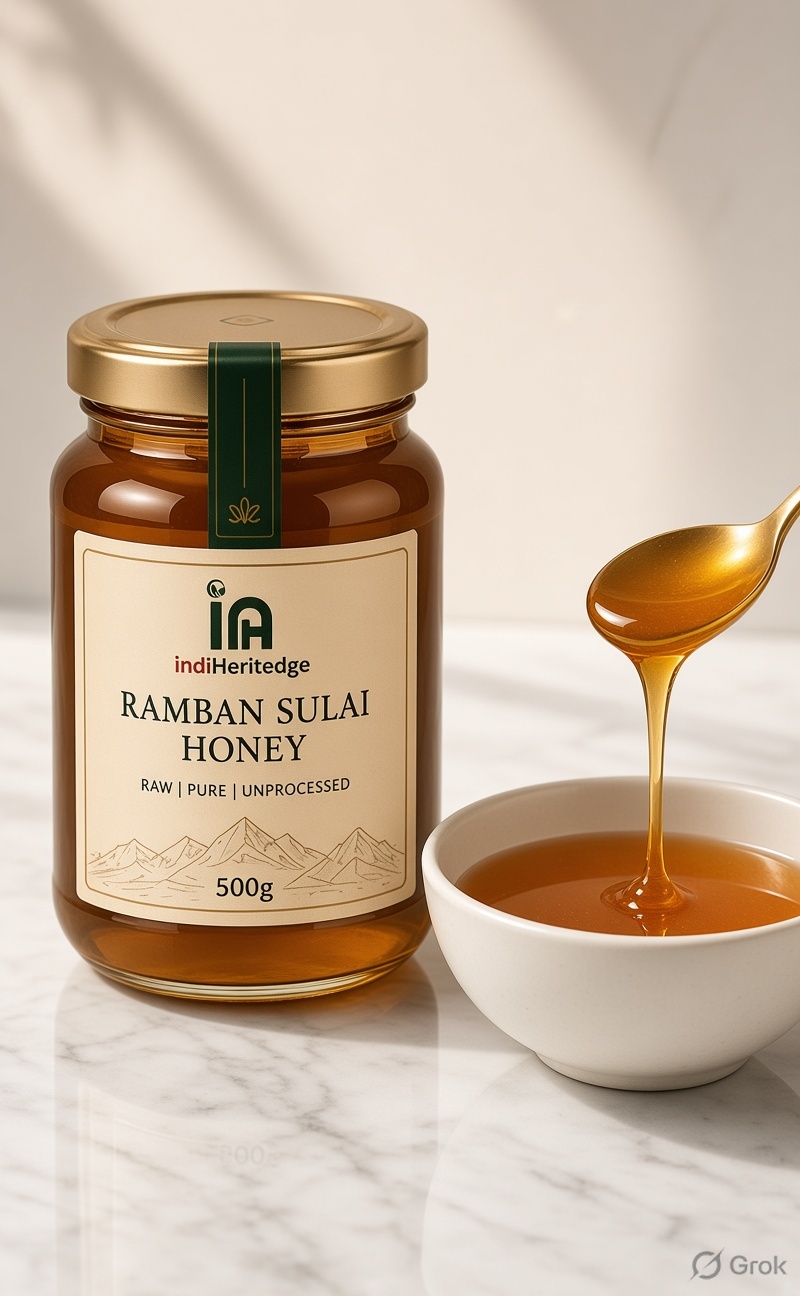
Ramban Sulai Honey is a GI-registered honey associated with Ramban and nearby districts of Jammu & Kashmir. The honey is derived from bees foraging on the nectar of Sulai, locally known as Van Tulsi. It is described in the GI application as ranging from white to light amber or almost clear, with a distinctive floral aroma and taste.
What Makes It Unique:
The distinctive character of Ramban Sulai Honey is linked to the floral source of Sulai (Plectranthus rugosus). The GI documentation describes the honey as crystal clear to white or amber in colour, with sweet and aromatic floral undertones. Its characteristics are influenced by the floral source and environmental conditions of Ramban and surrounding areas.
Production Process:
Sulai plants grow on stony hillsides at elevations of approximately 800–3,000 metres and provide nectar and pollen for honeybees. During the flowering period, bees forage on Sulai blossoms. Traditional and box-based beekeeping methods are used, followed by extraction, filtering, cleaning, filling, packaging, and trading of the honey.
Historical Background:
Beekeeping in the Jammu region has historical references dating back to 1470 AD. Traditional beekeeping has been practiced in Ramban and surrounding districts for generations, using indigenous methods such as wall, log, and other locally designed hives.